About.      Artistic practice.      Curatorial Practice.      Contact.

Latent Apparitions series

Amidst worries on capitalism’s impact and failures and the question of how to react, as a maker, I started wondering how artists in Early Capitalism responded to the (then) new societal changes. This inspired the video series Latent Apparitions, where I enter into a conversation with art works from that period to reflect on current developments. Each work takes different painting genres of the seventeenth century as a starting point, such as still life, animal scenes and landscape. While none of these paintings have the human figure as a direct protagonist, they become actors or sceneries to tell stories of how these visual representations from the Early Modern period started capturing and shaping new ways of experiencing the world that still impact the way we live. For example, ways in which we relate to one another, to materiality, ambition, nature, new technologies, as well as to a sense of endless continuity and progress.

Latent Apparitions N°4

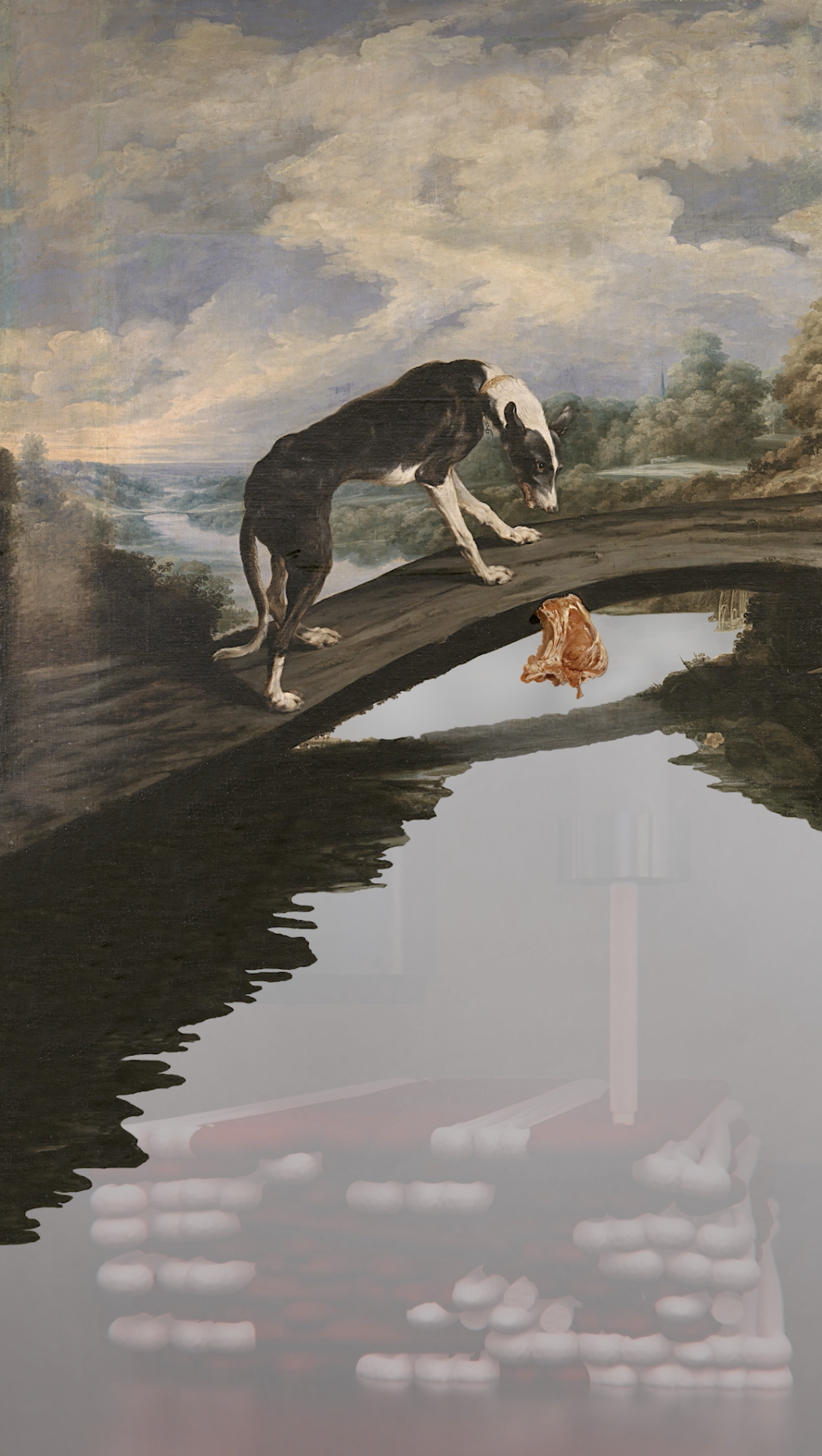
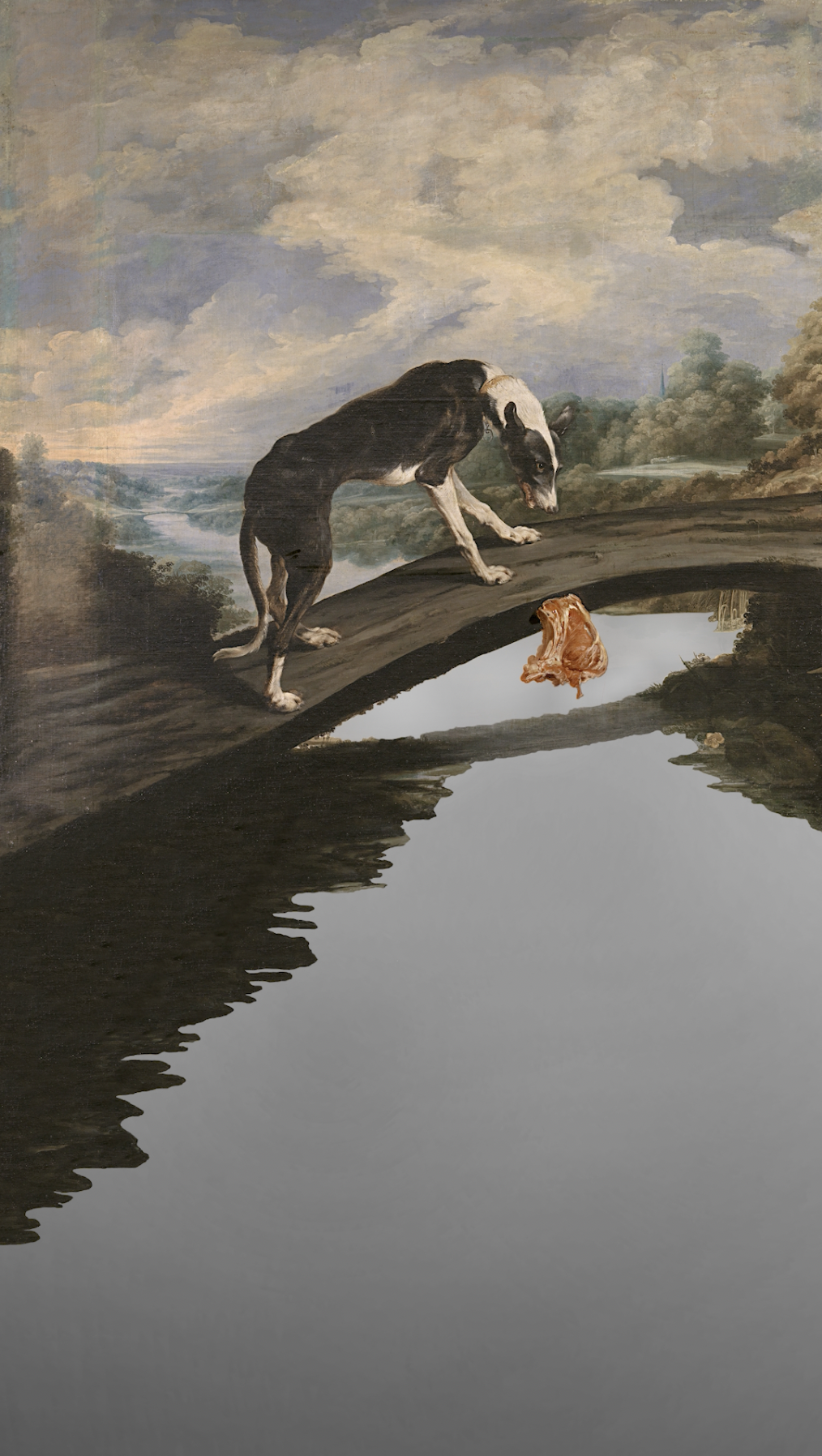
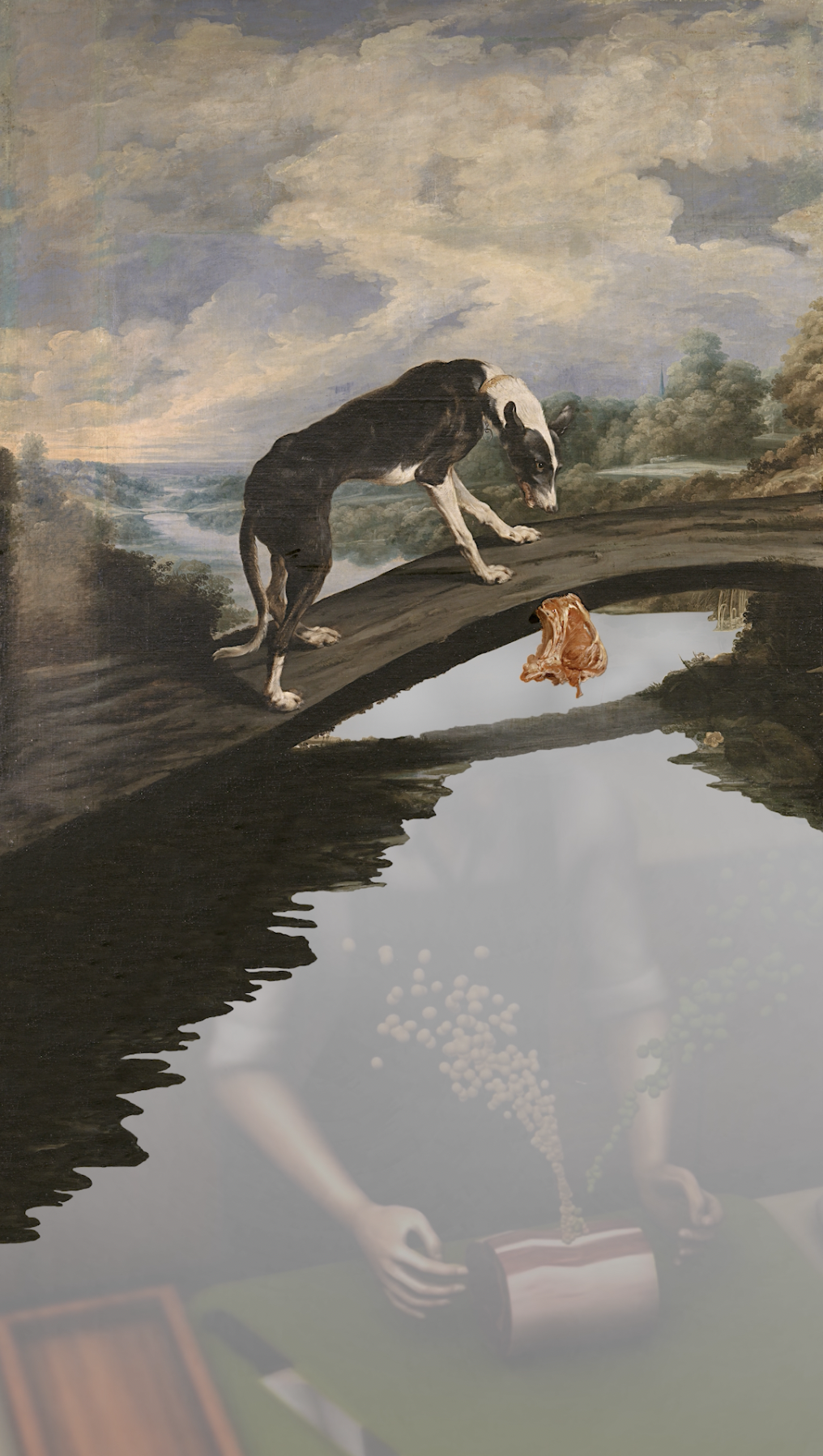
In Latent Apparitions N°4, Paul de Vos’ painting titled Fable of The Dog and The Prey has been altered to tell a new story.
In the original fable, when the dog sees the reflection of the meat it carries in the water, it thinks it is real and better than what is already in its mouth, and drops it to catch the reflected one, then being left with nothing.

In the new reading, the reflection of the meat and ambition for more has transformed into a promotional animation for 3D meat. At the same time, in the background we hear a fragment of a film, where an actor metaphorically exalts the violence and strength of a lion, as a key to success.
By connecting the pre-capitalist fable with contemporaneity, the work reactivates the critique of a western capitalist culture highly focused on unsustainable ambitions, competition and the success of the strongest.
No data was found